What your mood tracker is missing: the case for energy budgeting
 Image by vectorjuice on Freepik
Mood tracking apps like Daylio and Bearable made self-tracking feel like something a normal person would actually do. Millions of people log how they feel, tag what they did, and after a few weeks start noticing patterns. That's real. That matters.
But there's a wall most people hit eventually: you can see that certain days are worse, and you can see which activities show up on those days. What you can't figure out is what each thing actually cost you, specifically enough to do something about it. Energy budgeting picks up where mood tracking stops.
What Daylio and Bearable do well
Daylio lets you log multiple times a day with a 1-5 mood rating, tagged activities, and notes. The streaks keep you coming back. After a few weeks you can pull up the calendar view and see it: bad sleep plus a packed meeting schedule reliably produces a rough Wednesday. It's got a 4.8-star rating across nearly half a million reviews, and that's earned.
Bearable goes a lot further. Mood on a 1-10 scale, plus symptoms, medications, sleep quality, weather, energy levels, all correlated against each other over time. It was built with input from chronic illness communities, and the depth shows. If you're managing a condition where you need to correlate dozens of factors against how you feel, Bearable is probably the best thing out there.
Where the frame limits you
These apps aren't short on features. The limitation is more structural. Mood is always the starting point. Every log begins with "how do you feel?" and everything else (activities, tags, notes) gets attached to that feeling. Emotion is the center of the data structure. Activities are context around it.
That works for emotional patterns. It's less useful when you're trying to answer "why am I wiped out by Thursday and what specifically is eating my capacity?"
Daylio can show that on days you logged "work" and "meetings" and "commute," your mood was lower. It can't show that the Tuesday standup costs about a 4 while the same meeting on Friday costs a 7. It can't tell you commuting is 35% of your daily capacity while the work you commute for is only 25%. Those are resource allocation questions. Mood-first tools aren't built for them.
Bearable tracks energy, though. Isn't that the same thing?
Bearable does let you rate energy throughout the day, morning, midday, evening. That's more than Daylio offers. But there's a structural difference.
Bearable's energy rating is a daily-level metric: how energetic do you feel right now? It gets correlated against your other tracked factors. The output is something like "sleep quality is associated with higher energy" or "this symptom is associated with lower energy." Useful for knowing which factors matter. Doesn't tell you what each activity cost.
Energy budgeting treats energy as a per-activity cost. The standup cost 4. That email thread cost 3. The project review cost 7. Each one is its own line item, and those line items roll up into category totals and weekly budgets. The question isn't "how energetic do I feel?" It's "how much did that specific thing cost?"
It's the difference between a credit score and a bank statement. The credit score says you're fine. The bank statement shows you spent $200 on something you forgot about.
Activity cost as the primary unit
Bounded Self starts with what you did and rates what it cost.
Morning standup: 4. Email triage: 3. Deep project work: 5. A walk: 1. Dinner with a friend: 6. The commute: 8.
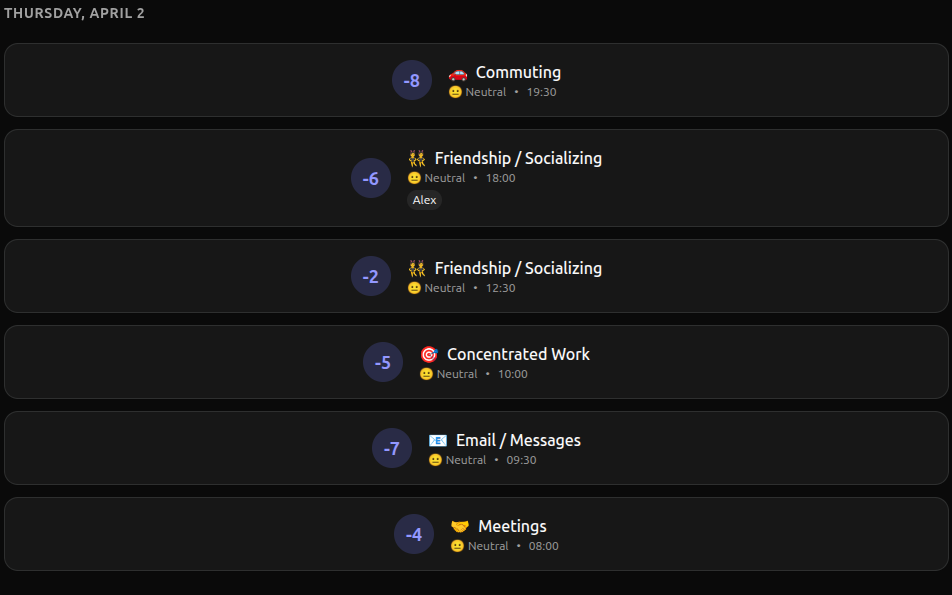
Your day is a list of line items instead of a mood snapshot. Wednesday afternoons consistently run expensive. A Friday recurring call costs 7 every week while the same meeting on Tuesday costs 4. Three points, every single week.
In Daylio you might notice Friday mood tends lower and "meetings" is tagged. But "meetings" is also tagged on Tuesday, when it costs less. Same tag. Different cost. That distinction vanishes when mood is the unit and activities are labels.
From tracking to budgeting
If you've used YNAB or any envelope budgeting app, this will click. Every dollar gets a job before you spend it. Energy budgeting works the same way.
Set a weekly budget of 200 points. Allocate: 60 for Work, 35 for Meetings, 25 for Email, 20 for Commute, 20 for Social, 15 for Exercise, 15 for Family. Small buffer left over. Then track what actually gets spent.
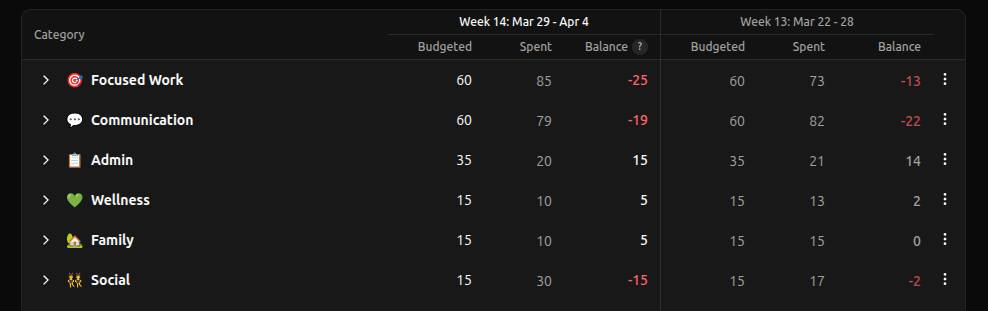
Week one: Work costs 65, Social costs 30, everything else close to plan. Week two: Work jumps to 85. A new project added three afternoon blocks that weren't there before. The app flags that shift before it turns into burnout.
Spending energy isn't the problem, by the way. A big number at the end of the week just means you had a full day. The thing worth paying attention to is when a category that normally runs around 4 suddenly costs 8. You wouldn't panic if your grocery bill was $400 every month. You'd notice if it hit $800. Same idea.
Neither Daylio nor Bearable does this. They record what happened. Energy budgeting compares what happened to what you planned, and flags the gap.
What this looks like after a month
Four weeks in, your commute shows up as 35% of weekly energy. That's a number you can point to when asking about working from home. Not "I feel tired from commuting." More like "here are four weeks of data showing commute takes more out of me than the work I commute for."
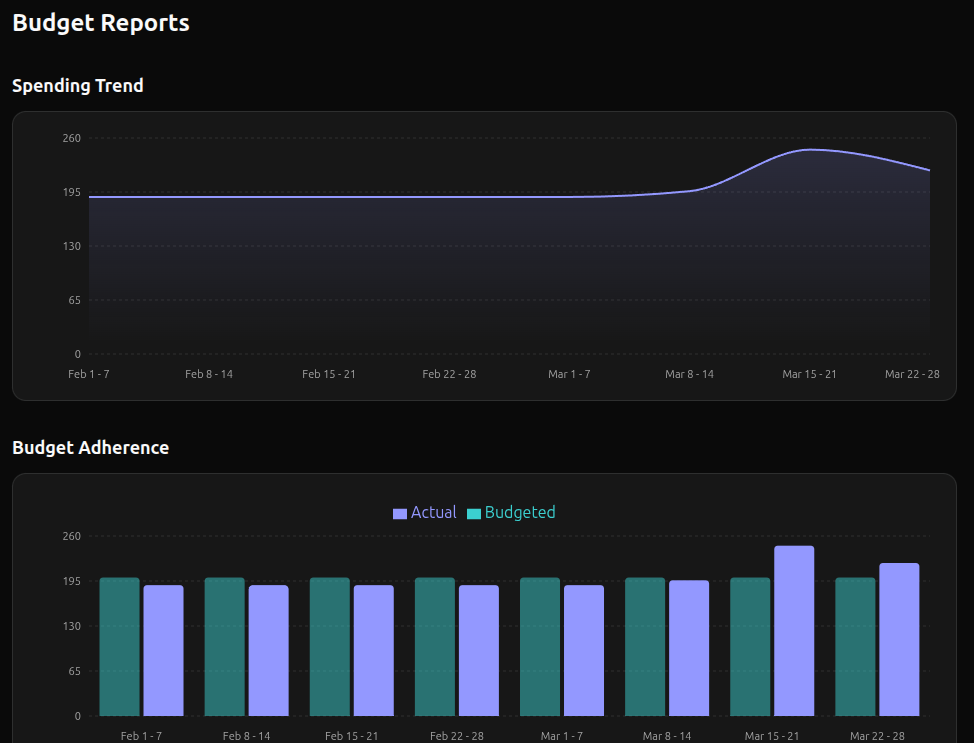
Or: Friday meetings costing about 40% more energy than the same meetings on Monday. Same length, same people, same agenda. Moving a late afternoon call to earlier in the day could recover seven points a week. That pattern doesn't come from reflecting on how you felt. It comes from reading cost data.
Or a new project lands on your plate. 30 points a week. Fine by itself, except the old project still runs at 40. Now you're at 70 against a work allocation of 60. You catch that in the first week instead of three months in. And when you bring it up with your manager, you've got numbers instead of "I'm feeling overwhelmed."
None of this is glamorous. It's spreadsheet brain. But seven points here, a shifted meeting there, and two months later your Thursdays don't feel like Fridays anymore.
Your data stays yours
This kind of data gets personal fast. Which meetings drain you, which people are expensive to be around, which tasks barely register. That shouldn't sit on someone else's servers without real protections.
Bounded Self uses row-level security. Even we can't query your entries. No AI reads your journals or trains models on your data. You can export everything as JSON whenever you want, and deleting your account erases it all within 30 days.
Different tools for different questions
Daylio is good at what it does. Bearable is the best option for chronic conditions by a wide margin. If either works for you, keep using it. But if you've been staring at mood charts for weeks and the patterns aren't turning into changes, energy budgeting asks a different question entirely.
Bounded Self has a free tier with ten default categories and basic tracking. You don't need a credit card, and each entry takes about ten seconds. A couple weeks of data is usually enough to find something worth adjusting. Most people expect one thing to be the big drain, and it turns out to be mid-range. The expensive one is something they hadn't thought about. You need line items to see that.